Trust as tender: What we fall back on when the money thins
07 Oct 2026

Download the new research paper from Lena Bheeroo (2024 / 2025 #ShiftThePower Fellow and current Possible Now Stitching Fellow): Trust as Tender: Decolonizing Mindsets to Reimagine Power and Accountability in Community Philanthropy.
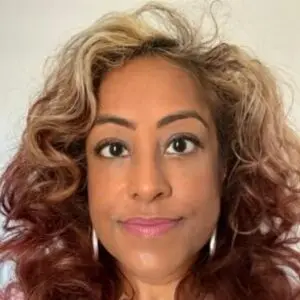
Lena Bheeroo
Over the past year, as a #ShiftThePower Fellow with the GFCF, I have been asking people across our sector one question: what does trust look like in your everyday work? The answers, from community philanthropy practitioners, movement leaders, funders and INGO chief executives, became my Fellowship paper, Trust as Tender: Decolonizing Mindsets to Reimagine Power and Accountability in Community Philanthropy.
It took me longer to finish than I expected. World events kept pressing into sector events, and sector events kept pressing into my own life, until the writing itself slowed to something closer to sitting than typing. I used to think that was a failure of discipline. Now I wonder if it was something else: that a question like trust, invisible, unhurried, easy to skip past, asks something of you that a deadline does not always allow for. You cannot rush the kind of attention it takes to actually sit with what binds us together, and perhaps it is fitting that a paper about trust refused to be written quickly.
I finished it in the UK, while watching organizations across civil society brace for funding that is shrinking. Some are closing or merging. Colleagues I care about are carrying the exhaustion of not knowing what next year looks like, and people in movements I love are asking each other, quietly, whether the work can continue.
It would be easy to read all of this as a story of decline. And yes, the money is declining. But the ideas for how to solve the problems our communities and our world face are not. They are vast, varied and very much alive. What they need to grow is not only money. It is the ground they are planted in. It feels more true than ever that what we will be forced to lean on is not another model or another strategy, but the trust and relationships we already hold.
The thing we find hardest to do
Here is what I have noticed in myself, and in so many people around me – we tend not to want to be too much. We do not want to ask for help, or reach out before we absolutely have to, or seem as though we cannot manage. Somewhere along the way, many of us absorbed the idea that needing other people is a kind of failure.
And yet it is in times of need that trust in our relationships matters most, and the funding, political and economic landscape now feels like exactly that kind of moment. What is missing is rarely the idea. It is often the trust to carry it.
The same unease about need runs through how our sector treats communities. They are asked to prove themselves before they are trusted, and who is asked to prove themselves first follows a familiar pattern of race and geography. That is not only a personal reluctance to ask for help, or an institutional habit. It is political, because who benefits from a system staying exactly as it is tells you far more about why it persists than any account of inherited caution ever could.
“What would it mean to take the trust communities already hold seriously, at the scale of international funding relationships? What would it look like if trust came first, and funding followed it, rather than the other way around?”
That is what I wanted to explore in my paper. What would it mean to take the trust communities already hold seriously, at the scale of international funding relationships? What would it look like if trust came first, and funding followed it, rather than the other way around?
The paper opens with a conversation with a friend in Nigeria, about what her community would do for her on a bad day. I won’t spoil it here, but it changed how I think about what trust is actually worth. Tender, in the sense I mean it, works in two ways – a currency in its own right, one this sector chronically undervalues and rarely knows how to count, and the tenderness, the care, that the word also carries.
Why I turned the lens on the North
At the GFCF Community Philanthropy Symposium in Nairobi last year, I was reminded, kindly but clearly, that I sit in the Global North, and encouraged to turn the same questions I was asking of the system, onto power holders closer to home.
So I did. As someone of African heritage and part of the diaspora, I sit inside UK institutions as well as organizing outside them. My relationship to these questions is personal as well as professional. I could have written this paper only about the Global South, where the case for trust over paperwork is, in many ways, easier to make. Instead, alongside conversations with community philanthropy practitioners from Tanzania to Serbia to Ukraine, I spoke with people inside UK funders, a large US foundation and Northern INGOs. There are people inside these institutions who can see clearly how the systems they work within actually operate, and who are trying, as far as they are able, to navigate and negotiate the processes, structures and compliance systems around them in order to truly connect with the communities, activists and advocates whose lives those systems shape.
What struck me was not that these people exist, since I already knew they did, but how candid they were willing to be. Programme officers at one large US foundation named, openly, a perception across the sector that partners in the Global South are more likely to misrepresent themselves and need policing, in ways partners in the Global North are simply never assumed to require. They described it as something they actively work against. I had rarely heard it said so plainly from inside a major foundation: racialized suspicion, built into the architecture of due diligence.
This is not a story in which the North has fixed itself. Every one of those conversations was frank about how far practice still falls short of what they believe it should be. But it mattered to me to recognize that there are people inside institutions who are pushing, sometimes against the grain of their own organizations. If we only ever see the North as one solid wall of power, we miss the allies standing inside it, and the relationships we could be building with them.
None of that undoes the paperwork, the due diligence, or the power those institutions still hold. But it matters.
Patience dressed up as justice
Honesty is a beginning, but it is not the same thing as repair. Somewhere in the writing, I found myself in a section on reparative justice I had not planned to write, and which became, by the end, one of the arguments I feel most strongly about. Trust cannot only ever flow in one direction. As the paper puts it: “A relationship that only ever asks the less powerful party to extend trust, and never asks what the more powerful party owes in return, is not a relationship at all. It is patience dressed up as justice.”
“A relationship that only ever asks the less powerful party to extend trust, and never asks what the more powerful party owes in return, is not a relationship at all. It is patience dressed up as justice.”
An apology costs a sentence. Repair costs something real, which is why it is so rarely offered, and why it is the real measure of whether an institution means what it says.
Trust as the soil
In the anti-racism group I have run for several years with chief executives of UK international development organizations, we come back again and again to trust. Not as a nice-to-have, but as the soil in which everything else grows. Where trust is present, work takes root. Yet trust is rarely the visible part of the work. Nobody puts trust on a grant report, or measures it in a results framework. Some of the most important evidence of trust will always look, from the outside, like the absence of evidence. And still, it is the thing that decides whether anything planted in a relationship actually takes hold, or simply sits on the surface until the next funding cycle disturbs it.
I have come to believe that trust and care are not soft skills sitting at the edge of the real work. They are the real work. Most of our due diligence systems operate from a position of doubt, where communities have to prove themselves before they are believed. The paper explores what changes when that is reversed, and the burden of proof shifts from the community to the institution: trust granted from the outset, rather than earned only after results have been shown.
The funders who were most honest with me were also the ones with the deepest relationships with their partners. Honesty is itself a form of soil.
You cannot build anything lasting on top of a relationship that cannot hold an uncomfortable truth
Without trust, things do not simply struggle. They wither, becoming temporary and short lived, no matter how much money or good intention is poured into them from above. I think that is true of funding relationships, but it is also true of movements, of the connections we try to build between them including in disability justice work, racial justice work and climate work, and of our CEO group itself, which has only ever held together because the people in that room trusted each other enough to say the difficult thing out loud. A statement can describe wanting to redistribute power. Only practice actually does it.
“A statement can describe wanting to redistribute power. Only practice actually does it.”
Trust, and the care that sustains it, may be the only thing that holds any of this together once the funding, the urgency, or the moment has passed.
The diagonal routes
When I look at where the real leverage lies for changing this system, I see the same places again and again: reforming the international financial architecture; bringing a reparative justice lens into the future of aid; building collective approaches across INGOs, civil society, funders and governments; protecting and enabling civic space and the rights of those most left behind; and building solidarity across movements, the African continent and across the Global South. None of these shifts move in straight lines.
We are used to thinking of power as running vertically – from donor down to grantee, from headquarters out to the “field.” And we are used to thinking of solidarity as horizontal – peers standing alongside peers. But much of what actually shifts things happens diagonally, through the routes that connect us across a hierarchy rather than only up and down it. Think of the programme officer who picks up the phone to a grassroots leader she met at a gathering. The INGO chief executive who connects a community foundation to a funder’s board. The activist who trusts someone inside an institution enough to tell them what is really happening. These routes are rarely written into any strategy, and yet they are where the real work of forging relationships and building together happens.
Recognizing those diagonal routes, naming them, investing in them and protecting them, feels to me like one of the most important things we can do right now.
Leaning in, not pulling back
When resources contract, the reflex is to pull inward. To protect our own organizations, compete for what is left, and stop reaching out. I understand that. But I think this is precisely the moment to do the opposite. To ask for help. To offer it. To tend the relationships that will carry us, and to treat trust not as something we can afford once the money returns, but as the thing that will still be standing when the money has gone.
My friend in Nigeria, whose story opens my paper, already knows how to do this, and so does her community. For them, trust was never what came after the money. It was what came instead of it. As the money thins across our sector, that is the lesson I keep returning to, and the one the paper tries to carry further.
By: Lena Bheeroo, 2024 / 2025 #ShiftThePower Fellow and current Possible Now Stitching Fellow. Read Lena’s paper: Trust as Tender: Decolonizing Mindsets to Reimagine Power and Accountability in Community Philanthropy.